
3 Formats Compared
Potency & variance data
Capsules, Raw Mushrooms, and Tinctures: A Full Comparison
Every format for taking a microdose — how each works, its precise advantages and drawbacks, potency variance, preparation, and which profile of person each suits best. No product recommendations, just honest information.
Educational and harm reduction content only — not medical advice. Psilocybin is a controlled substance in most jurisdictions. If you are experiencing a mental health crisis, contact the 988 Suicide & Crisis Lifeline (call or text 988) or your local emergency services.
The format you choose affects more than convenience — it shapes your dosing precision, onset timing, potency predictability, and long-term sustainability. This guide treats each format honestly, including its limitations, so you can make a decision based on your actual situation rather than which option sounds easiest on the surface.
The Three Formats at a Glance
Each format represents a different trade-off between precision, convenience, control, and complexity. There is no universally best option — but there are clearly better and worse choices depending on your goals and experience level.


WHAT THIS GUIDE DOES NOT COVER |
This page covers the three most common formats for microdosing psilocybin mushrooms. It does not cover synthetic psilocybin (used only in clinical research settings), truffles (legal in some jurisdictions, follow the same principles as dried mushrooms), or chocolate/gummy edibles (whose potency claims are extremely difficult to verify and are not recommended for precise microdosing).
The Potency Variance Problem: Why This Matters More Than Format
Before comparing formats, understand the single most important variable in microdosing safety: psilocybin content varies enormously across mushroom samples — by strain, growing conditions, drying method, age of the sample, and even location within a single batch. A dose that is sub-perceptual from one batch may produce a noticeable altered state from another at the identical weight.
Your choice of format affects how well you can manage this variance — which is why precision matters even when the underlying material is imprecise.
potency variance by format (relative scale)
Lab verified capsules
DIY Capsules
Tinctures DIY
Raw Mushrooms Weighed
Raw Mushrooms Eyeballed
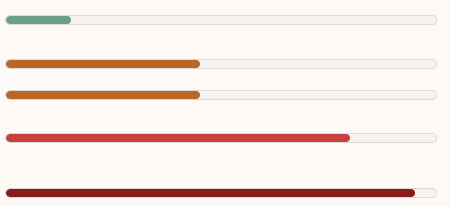
Very Low
Moderate
Moderate
High
Extremely High
THE BATCH VARIATION REALITY|
Published analyses of dried psilocybin mushrooms have found psilocybin content ranging from under 0.2% to over 1.8% of dry weight depending on species, strain, and preparation. This means a 0.1g dose from a high-potency batch could deliver the equivalent of a 0.5g dose from a weak one. This is not an argument against using raw mushrooms — it is an argument for starting every new batch as if it were your first dose, regardless of your experience.
Capsules: Full Deep Dive
Format 01
capsules
Pre-filled gelatin or HPMC shells containing ground dried psilocybin mushrooms | Recommended for beginners
Capsules are the most popular format among microdosers for straightforward reasons: they remove the need to weigh each dose, they are tasteless and easy to take, and a well-prepared batch delivers consistent doses across the cycle. They come in two types: commercially prepared (where someone else has ground and filled the capsules) and DIY (where you grind and fill your own from dried mushrooms using a capsule machine).
Onset Time
45–90 min
Slightly slower than raw
Taste
None
Capsule masks mushroom taste entirely
Precision
High (DIY)
Variable (commercial)
Depends on filling method
Dose Adjustment
Difficult
Must re-fill to change dose
Commercial capsules: what to know
Commercially prepared capsules claim a specific dose — typically 0.1g, 0.2g, or similar — but these claims are not independently verified and should be treated with skepticism. Filling consistency in small-batch operations varies, and psilocybin content of the underlying mushroom material varies further. The dose stated on the label is a starting point, not a guarantee.
If using commercially prepared capsules, treat your first dose as a calibration dose: take it on a genuinely low-pressure day with nothing important scheduled, regardless of what the label says. Start with the lowest available dose in the product range.
DIY capsules: the case for making your own
DIY capsule preparation — grinding your own dried mushrooms and filling capsules using a capsule machine — is significantly more reliable than commercial options when done correctly. You control the grind consistency, fill weight, and capsule size. With a 0.001g milligram scale and a systematic filling process, DIY capsules can achieve dose-to-dose variation of under 5%, which is the tightest consistency achievable outside a laboratory.
Advantages
No weighing required on dose days once batch is prepared
Tasteless — eliminates mushroom flavour entirely
Discreet and portable — identical appearance to supplements
Consistent dosing within a well-prepared batch
Easy to incorporate into existing supplement routine
Stackable with Lion's Mane for Stamets Protocol

Cannot easily fine-tune dose between capsule sizes
Slightly slower onset than raw due to capsule dissolution
DIY preparation takes time and requires equipment
Potency of base material still varies by batch
Harder to take "half a dose" for calibration purposes
disadvantages
Commercial label claims unverified — trust requires caution
ON THE CAPSULE SHELL TYPE |
Gelatin capsules (made from animal collagen) and HPMC/vegetarian capsules are both appropriate for microdosing. HPMC capsules dissolve slightly more slowly than gelatin — this can marginally extend onset time but is not clinically significant at microdose levels. Choose based on dietary preference.
Raw Mushrooms: Full Deep Dive
Format 02
raw dried mushrooms
Whole or ground dried Psilocybe mushrooms, weighed on a precision milligram scale before each dose | Best for experienced users
Weighing raw dried mushrooms on a milligram scale is the most fundamental form of microdosing — the approach used in most research protocols and by the largest proportion of long-term practitioners. Its primary advantage is complete dose control: you can adjust by 0.01g increments between dose days, and you are working directly with the material rather than trusting an intermediary's preparation. Its primary disadvantage is that it demands equipment, consistency, and a willingness to engage with meaningful potency variation between batches.
Onset Time
30–60 min
Fastest of the three formats
Taste
Strong, earthy
Can cause nausea for some
Precision
High (if weighed)
Requires 0.001g scale
Dose Adjustment
Very easy
Adjust by 0.01g on any day
The scale requirement is non-negotiable
Eyeballing dried mushroom doses is one of the most dangerous practices in microdosing. Dried mushrooms vary significantly in density, moisture content, and how well they pack — a "pinch" can range from 0.05g to 0.4g depending on the material and the person. A 0.001g resolution milligram scale costs under $20 and is the single most important piece of safety equipment for raw mushroom use.
If you don't have a milligram scale, you are not microdosing raw mushrooms safely. Make the capsules instead.
Batch calibration: treating every new batch as day one
When you move to a new batch of dried mushrooms — even from the same source — assume you don't know the potency. The correct approach is to weigh your standard dose, take it on a genuinely low-stakes day, and observe carefully. If it feels more intense than your previous batch, reduce by 20–30% for the next dose. If it feels weaker, hold the dose and give it two cycles before adjusting upward.
Advantages
Maximum dose flexibility — adjust by tiny increments at will
Closest to the source material with no processing intermediary
Fastest onset of any format
No preparation time once material is on hand
Easiest to "split" a dose for calibration purposes
No capsule filling equipment needed
High potency variance between batches
Strong taste can cause nausea, especially when fasted
Not discreet — obviously identifiable material
Inconsistency from humidity, uneven grind, and packing variation
More cognitively demanding — weighing required every dose day
disadvantages
Requires a milligram scale — non-negotiable for safety
ON GRINDING VS WHOLE PIECES |
Ground dried mushrooms (to a consistent powder) produce more uniform doses when weighed than whole pieces, which vary in density by cap vs stem, dried vs fresh ratio, and moisture retention. If using raw mushrooms regularly, a coffee grinder dedicated to the purpose produces more consistent weights than breaking off pieces by hand.
Mushroom tincture: Full Deep Dive
Format 03
mushroom tincture
Liquid psilocybin extracts in alcohol or glycerin base, dosed by volume using a dropper | Advanced users
Tinctures are liquid preparations in which psilocybin has been extracted from dried mushrooms into a carrier solvent — most commonly food-grade ethanol (alcohol) or vegetable glycerin (for an alcohol-free option). The result is a consistent-concentration liquid that can be dosed volumetrically using a calibrated dropper. The appeal is fast sublingual onset, extremely precise micro-adjustments by drop, and elimination of the taste and texture of mushroom material.
The significant drawback is preparation complexity: making a reliable tincture requires accurate extraction, solvent measurement, and ideally potency testing — none of which are simple without equipment and experience. Commercially available tinctures have the same label-claim reliability problem as commercial capsules, amplified by the difficulty of verifying liquid potency without analytical chemistry.
Onset Time
15–30 min
Fastest onset (sublingual)
Taste
Bitter/alcoholic
Glycerin versions are sweeter
Precision
High (volumetric)
Once concentration is known
Dose Adjustment
Very easy (by drop)
Most granular of all formats
How tinctures work: sublingual vs swallowed
When held under the tongue for 60–90 seconds before swallowing, tinctures allow partial absorption directly through the sublingual mucosa — bypassing first-pass liver metabolism and producing onset within 15–30 minutes. Swallowed directly, they behave similarly to capsules with a 45–75 minute onset. The sublingual route is the primary reason experienced users prefer tinctures: faster, more predictable onset makes calibration easier and dose-day planning cleaner.
The preparation challenge
A reliable DIY tincture requires: a known mass of dried, ground mushrooms; food-grade high-proof ethanol (or glycerin); accurate volumetric measurement; a multi-week cold extraction process or gentle heat extraction; and ideally reagent testing to confirm active compound presence. Each step introduces potential for concentration error. Without knowing the extraction efficiency from your starting material, the concentration of your tincture is an estimate, not a fact.
Advantages
Fastest onset of any format (sublingual)
Most granular dose adjustment — single drops
Easy to combine with other tinctures (Lion's Mane, etc.)
No taste of mushroom material
Very stable shelf life when properly prepared
Discreet — resembles any herbal tincture
Concentration accuracy requires skill and equipment
Commercial label claims even harder to verify than capsules
Alcohol base not suitable for everyone
Dropper calibration varies between products
Not appropriate for beginners — too many unknowns
disadvantages
Most complex preparation of any format
COMMERCIAL TINCTURE CAUTION |
Commercial psilocybin tinctures exist in unregulated markets and carry a higher risk of concentration inaccuracy than any other format. A product claiming "1mg per drop" has no verification behind it. If using a commercial tincture, treat your first dose as a complete calibration experiment — start with one drop on a low-stakes day and assess carefully before taking the stated dose.
Lemon Tek: A Format Modifier Worth Understanding
Lemon tek is not a separate format — it's a preparation method applied to raw mushrooms that converts psilocybin to psilocin via citric acid before ingestion. Ground dried mushrooms are soaked in fresh lemon or lime juice for 15–20 minutes, then consumed. The result is faster onset (20–40 minutes), perceived greater intensity, and shorter duration.
For microdosing, lemon tek is controversial and generally not recommended for beginners. The acid conversion increases bioavailability, meaning your 0.1g lemon-tek dose may behave more like 0.15–0.2g of raw mushroom. This can tip a genuine microdose into perceptible territory — which is precisely what we're trying to avoid.
LEMON TEK & MICRODOSING |
Some experienced microdosers use lemon tek intentionally to extend the reach of smaller amounts of material. If you do, reduce your standard dose by at least 30% to account for increased bioavailability, and only do so after you have thoroughly calibrated your response to standard raw doses from the same batch. Not appropriate for first cycles or new batches.
Full Comparison Table
A side-by-side reference across every dimension that matters for format selection.
Dimension | Capsules | Raw Mushrooms | Tinctures |
|---|---|---|---|
Dose precision | High (DIY) / Variable (commercial) | High (if weighed) | Very high (volumetric) |
Onset time | 45–90 minutes | 30–60 minutes | 15–30 min (sublingual) |
Potency variance | Low–moderate | Moderate–high | Moderate |
Ease of dose adjustment | Difficult (must re-fill) | Very easy (re-weigh) | Very easy (by drop) |
Preparation effort | Medium (capsule machine) | Low (scale only) | High (extraction process) |
Equipment required | Capsule machine, scale, grinder | Milligram scale (0.001g) | Scale, solvents, dropper bottles, testing |
Taste / palatability | None (shell masks taste) | Strong earthy taste | Bitter/alcoholic |
Nausea risk | Low | Moderate (taste triggers) | Low |
Discretion / portability | Very High | Low (identifiable) | High |
Suitable for beginners | Yes | With scale — yes | No |
Commercial reliability | Moderate — verify claims | N/A (self-prepared) | Low — hard to verify |
Cost | Low–medium (DIY) / Medium–high | Lowest | Medium (DIY) / High (commercial) |
Shelf life | 12–24 months (cool, dark, dry) | 2–18 months (airtight, dark, dry) | 2–4 years (alcohol base, dark) |
Storage and Shelf Life: Getting It Right
Psilocybin degrades over time through oxidation, moisture exposure, and heat. Proper storage is not optional — a poorly stored batch at month six can be dramatically less potent than a fresh batch, leading to the mistaken conclusion that "it stopped working."
The four enemies of potency
Light accelerates psilocybin oxidation — store in opaque or dark containers, never clear glass on a bright shelf. Moisture promotes mould and psilocin degradation — keep in airtight containers with a food-safe desiccant packet. Heat above approximately 25°C (77°F) accelerates breakdown — room temperature storage is fine for most climates; avoid near appliances, windowsills, or warm cupboards. Air exposure — each time you open the container, oxygen enters; minimize the number of openings by preparing enough for a full cycle at once and sealing tightly after each use.
Format-specific storage guidance
Dried mushrooms and capsules: Airtight glass jar, opaque or in a dark location, room temperature. Desiccant packet recommended in humid climates. Shelf life: 12–24 months with good practice, up to 36 months if frozen in a truly airtight container. Tinctures: Amber glass dropper bottles, stored away from light and heat. Alcohol-based: 2–4 years. Glycerin-based: 12–18 months. Refrigeration acceptable but not required for alcohol tinctures.
SIGNS YOUR MATERIAL HAS DEGRADED |
Mushrooms that have gone off are typically obvious: visible mould, significant discolouration (beyond the natural blue bruising of fresh material), or a distinctly off smell. Potency degradation without visible signs is harder to detect — if a batch that was previously effective stops working at the same dose, degradation is a more likely explanation than tolerance if you have been cycling correctly.
frequently asked questions
Are capsules more accurate than raw mushrooms for microdosing?
DIY capsules and raw mushrooms weighed on a milligram scale can both achieve comparable dose accuracy — the limiting variable for both is the potency variance of the underlying mushroom material, not the format. Capsules have the practical advantage of removing per-dose weighing from the routine, but they do not reduce the fundamental potency variance between batches. Commercial capsules are less accurate than either, because the label claim is unverified.
Can I just eyeball a mushroom dose without a scale?
No. Eyeballing dried mushroom doses is one of the most dangerous practices in microdosing. Dried mushrooms vary enormously in density — a "pinch" can range from 0.05g to 0.4g depending on the material and how it was handled. At microdose ranges, the difference between 0.05g and 0.3g is the difference between a sub-perceptual dose and a low-grade psychedelic experience. A milligram scale costs under $20 and is the single most important piece of safety equipment for anyone using raw mushrooms.
Do capsules absorb differently than raw mushrooms?
Yes, slightly. Capsules require digestion of the shell before the contents reach stomach acid, adding 15–30 minutes to onset time compared to raw mushroom powder consumed directly. This difference is not clinically significant at microdose levels — both capsules and raw mushrooms typically onset within an hour — but it is worth knowing if you are timing your dose relative to specific activities. If faster onset matters, raw mushrooms or tinctures are more appropriate.
How do I know if a commercial capsule label is accurate?
You largely cannot verify it without analytical chemistry. Commercial psilocybin products exist in unregulated markets where there is no independent verification of label claims. The practical harm reduction response is to treat the first dose from any commercial product as a calibration dose — take it on a genuinely low-stakes day, start with the lowest available dose in the product line, and evaluate your response carefully before taking subsequent doses at the stated amount.
Should I use gelatin or vegetarian capsules?
Both work well. Gelatin capsules dissolve slightly faster, which can shorten onset time marginally. HPMC (hydroxypropyl methylcellulose) vegetarian capsules dissolve a little more slowly — the difference is not meaningful at microdose levels. Choose based on dietary preference: gelatin capsules are derived from animal collagen; HPMC capsules are plant-based and suitable for vegans and vegetarians.
Does lemon tek actually make microdoses stronger?
Yes — lemon tek converts psilocybin to psilocin via citric acid before ingestion, increasing bioavailability and producing faster, more intense onset. For microdosing specifically, this means your standard dose will feel stronger and onset sooner than the same weight prepared without lemon tek. If using lemon tek intentionally, reduce your standard dose by at least 30% to maintain sub-perceptual effect. It is not recommended for beginners or when switching to a new batch.
What capsule size is best for microdosing?
Size 00 is the most versatile choice for microdosing — it holds approximately 0.5–0.7g of mushroom powder depending on density, which gives you room for a 0.1–0.3g mushroom dose plus Lion's Mane powder if you're following the Stamets Stack. Size 0 works for single-substance doses only. Size 000 is larger and easier to fill but harder to swallow for some people. Most capsule machines accommodate multiple sizes.
Continue reading
Explore the other cluster pages in this guide series.
How to start microdosing safely — complete guide →
Microdosing risks and side effects — full guide→
Medical disclaimer: This guide is for educational and harm reduction purposes only. It does not constitute medical advice. Psilocybin remains a controlled substance in most jurisdictions. Consult a qualified healthcare professional before making any decisions about your health. The authors do not endorse illegal activity of any kind.